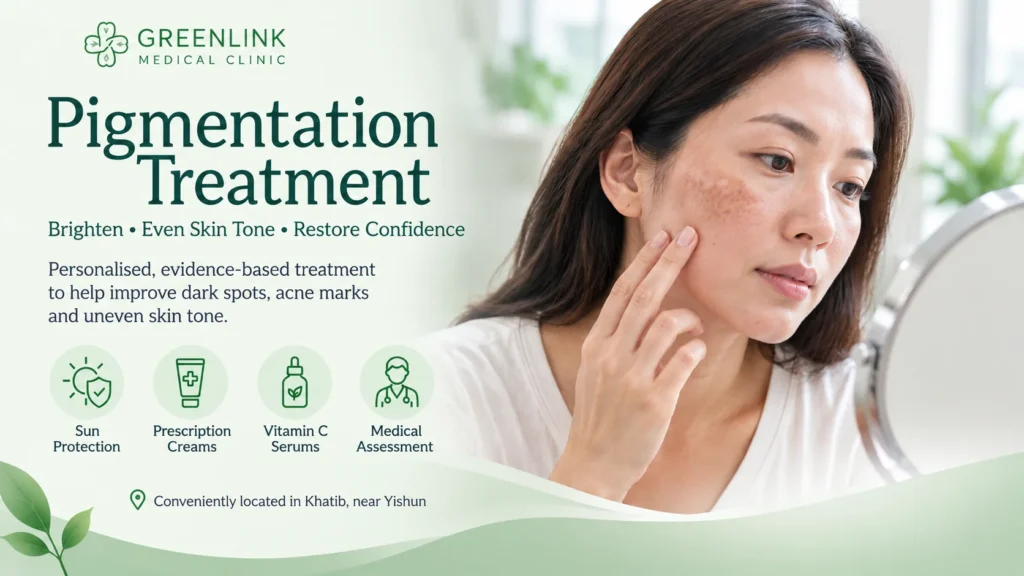
Pigmentation Treatment in Khatib & Yishun
Uneven skin tone, dark spots, and facial pigmentation are common skin concerns.
At GreenLink Medical Clinic, we assess the underlying cause of pigmentation and recommend evidence-based treatment to help improve your skin.
What is Pigmentation?
Pigmentation refers to areas of skin that become darker due to increased production or deposition of melanin, the pigment responsible for skin colour.
Pigmentation can develop gradually over time and may be triggered by sun exposure, ageing, hormones, acne, inflammation, or certain medications.
How Pigmentation Develops
☀️ Sun Exposure
↓
🧬 Increased Melanin Production
↓
🌑 Dark Patches or Spots Appear
↓
🛡️ Daily Sun Protection
+
💊 Medical Treatment
↓
✨ Brighter, More Even Skin Tone
Common Pigmentation Conditions
✔ Melasma
✔ Post-inflammatory hyperpigmentation (after acne or eczema)
✔ Sun spots (Solar Lentigines)
✔ Freckles
Common Triggers
☀️ Sun exposure
👩 Hormonal changes
😷 Acne
🔥 Skin inflammation
🧬 Genetics
💊 Certain medications
How We Assess Pigmentation
✔ Examine the skin carefully
✔ Identify the type of pigmentation
✔ Assess possible triggers
✔ Recommend appropriate treatment
✔ Advise when specialist referral is appropriate
Personalised Pigmentation Treatment
🌞 Sun Protection
Daily sun protection is the cornerstone of pigmentation treatment. Without adequate sun protection, pigmentation often returns even after successful treatment.
We recommend using a broad-spectrum sunscreen (SPF 50+, PA++++) every day and reapplying it when outdoors.
🧴 Prescription Depigmenting Creams
Prescription creams can help reduce excess melanin production and gradually lighten areas of pigmentation.
✨ Vitamin C Serum
Vitamin C is a powerful antioxidant that helps brighten the skin, improve overall skin tone, and protect against environmental damage.
🌤️ Melasma
Often affects the cheeks, forehead, and upper lip. Commonly associated with hormonal changes and sun exposure.
😷 Acne Marks
Dark marks left behind after acne inflammation.
🌞 Sun Spots
Flat brown spots caused by years of cumulative sun exposure.
👵 Age Spots
Pigmented spots that become more common with ageing and sun exposure.
Frequently Asked Questions
Does pigmentation fade on its own?
Some forms of pigmentation gradually improve, while others may persist without treatment. Early treatment often produces better results.
How long will treatment take?
Pigmentation usually improves gradually over 2–6 months, depending on the underlying cause and how consistently treatment is used.
Is sunscreen really necessary?
Yes. Daily sun protection is one of the most important parts of treating pigmentation and preventing recurrence.
Will I need laser treatment?
Not always. Many patients experience improvement with prescription creams, good skincare, and consistent sun protection. Some patients with more resistant pigmentation may benefit from referral to a dermatologist or aesthetic physician for further treatment.
🔗 Related Condition: Acne
Dark marks that remain after acne heals are known as post-inflammatory hyperpigmentation. Treating acne early may help reduce the risk of long-lasting pigmentation.
➡️ Learn More About Acne Treatment
Looking for Pigmentation Treatment in Khatib or Yishun?
Whether you’re concerned about melasma, sun spots, acne marks, or uneven skin tone, an early assessment can help identify the underlying cause and recommend the most appropriate treatment.
At GreenLink Medical Clinic, conveniently located in Khatib, near Yishun, we provide personalised assessment and treatment for common pigmentation conditions. We will discuss treatment options and help you develop a skincare plan tailored to your needs.
Drop by for a consultation and take the first step towards clearer, more even-toned skin.
🔍 Explore More Skin Conditions
Visit our Skin & Dermatology Hub to learn more about the common skin conditions we diagnose and treat at GreenLink Medical Clinic, including:
GreenLink Medical Clinic
Khatib, Yishun