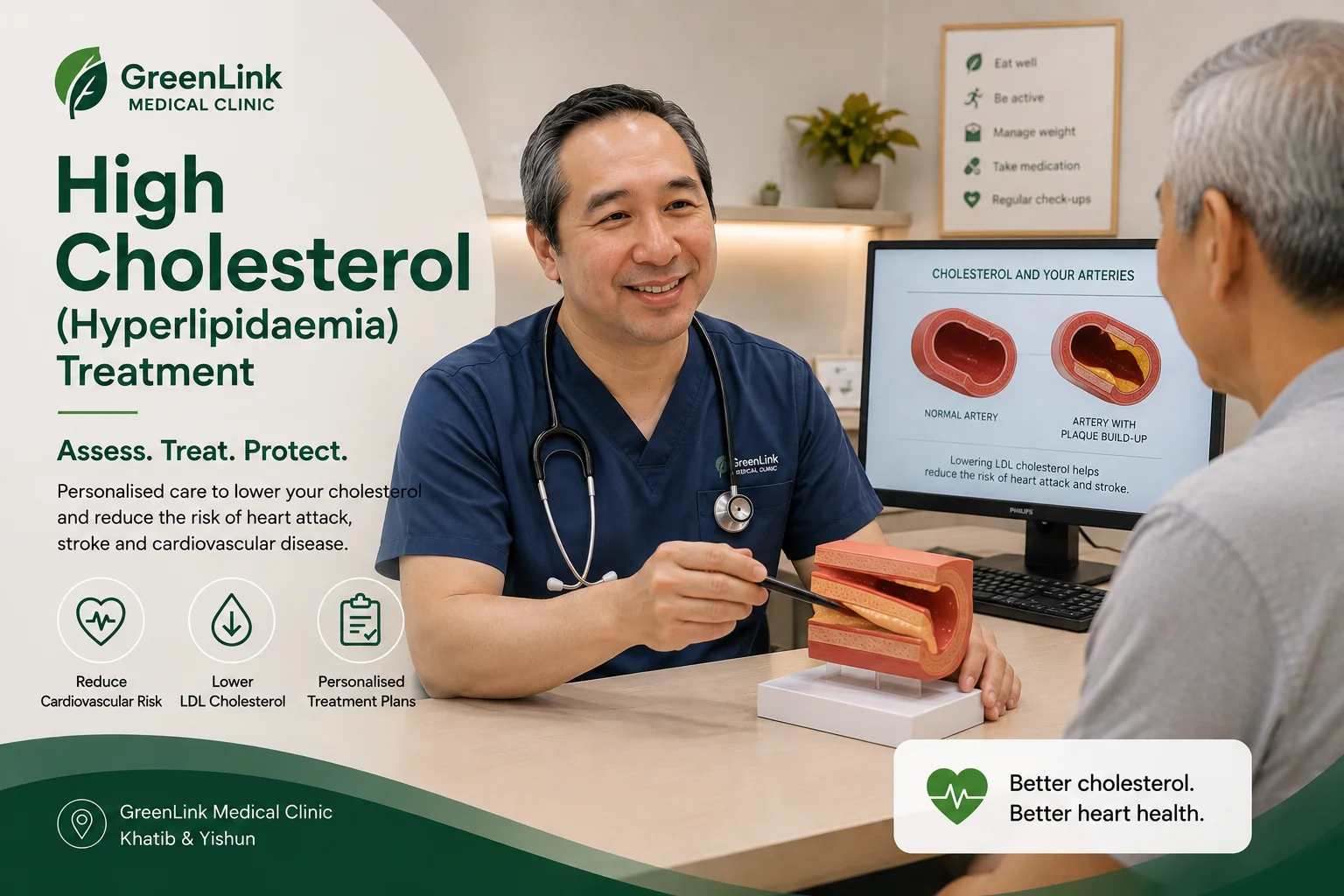
High Cholesterol (Hyperlipidaemia) Treatment in Khatib & Yishun
High cholesterol usually causes no symptoms, yet over time it can quietly damage your arteries and increase the risk of heart attack and stroke. The good news is that early diagnosis and appropriate treatment can significantly reduce these risks.
At GreenLink Medical Clinic, we provide personalised cholesterol management based on your overall cardiovascular risk, from lifestyle advice and statin therapy to newer treatments such as PCSK9 Inhibitors (e.g. Evolocumab / Repatha®) for suitable patients.
When added to standard treatment, Repatha® can lower LDL cholesterol by approximately 60% in suitable patients.
💡 Key point
High cholesterol usually causes no symptoms, but early diagnosis and treatment can significantly reduce your risk of heart attack and stroke.
Health Screening can help detect high cholesterol early, allowing treatment to begin before complications develop.
👉 Learn more about our Health Screening services.
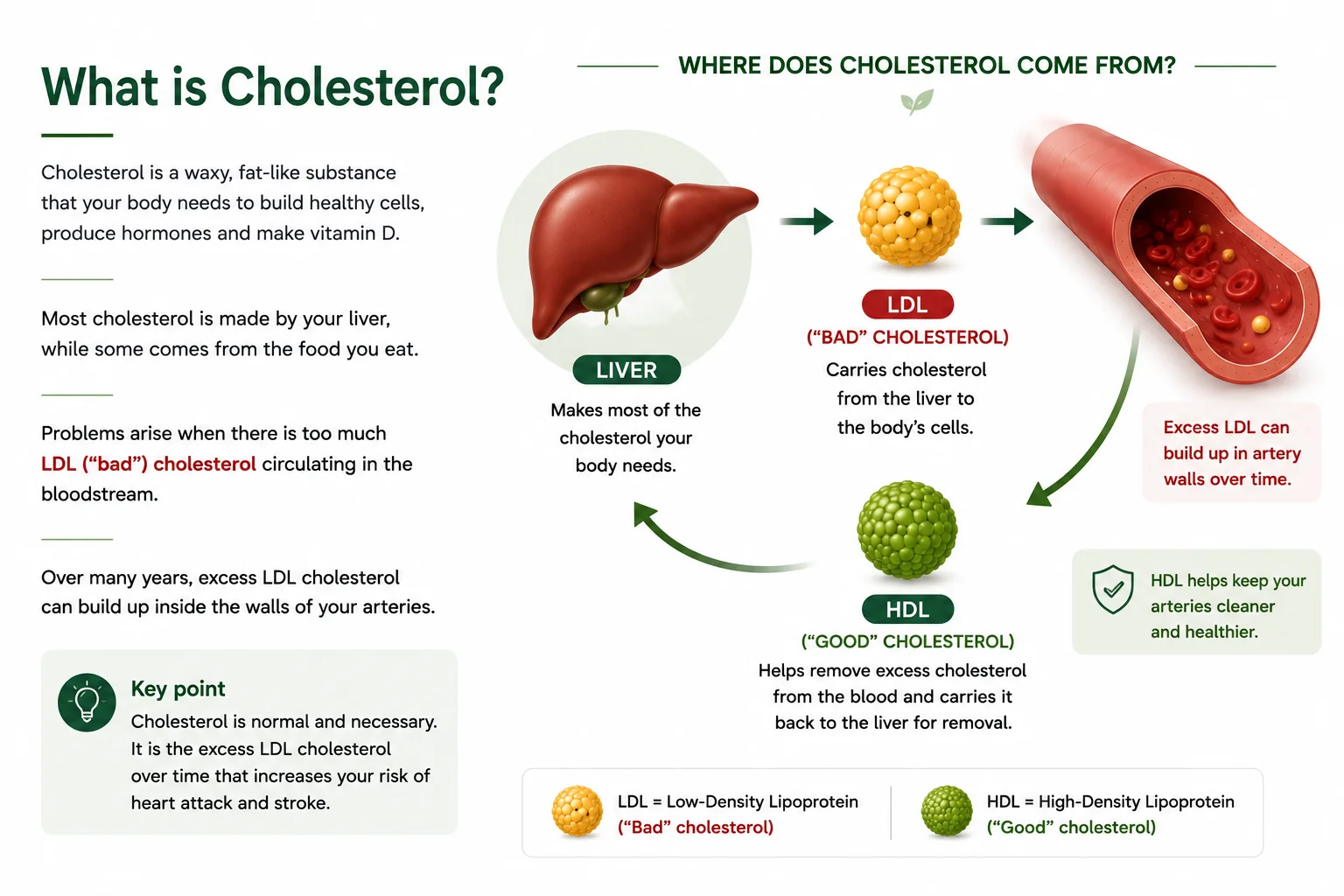
What is Cholesterol?
Cholesterol is a waxy, fat-like substance that is naturally produced by your liver and is also found in some foods. Your body needs cholesterol to build healthy cells, produce hormones and make vitamin D.
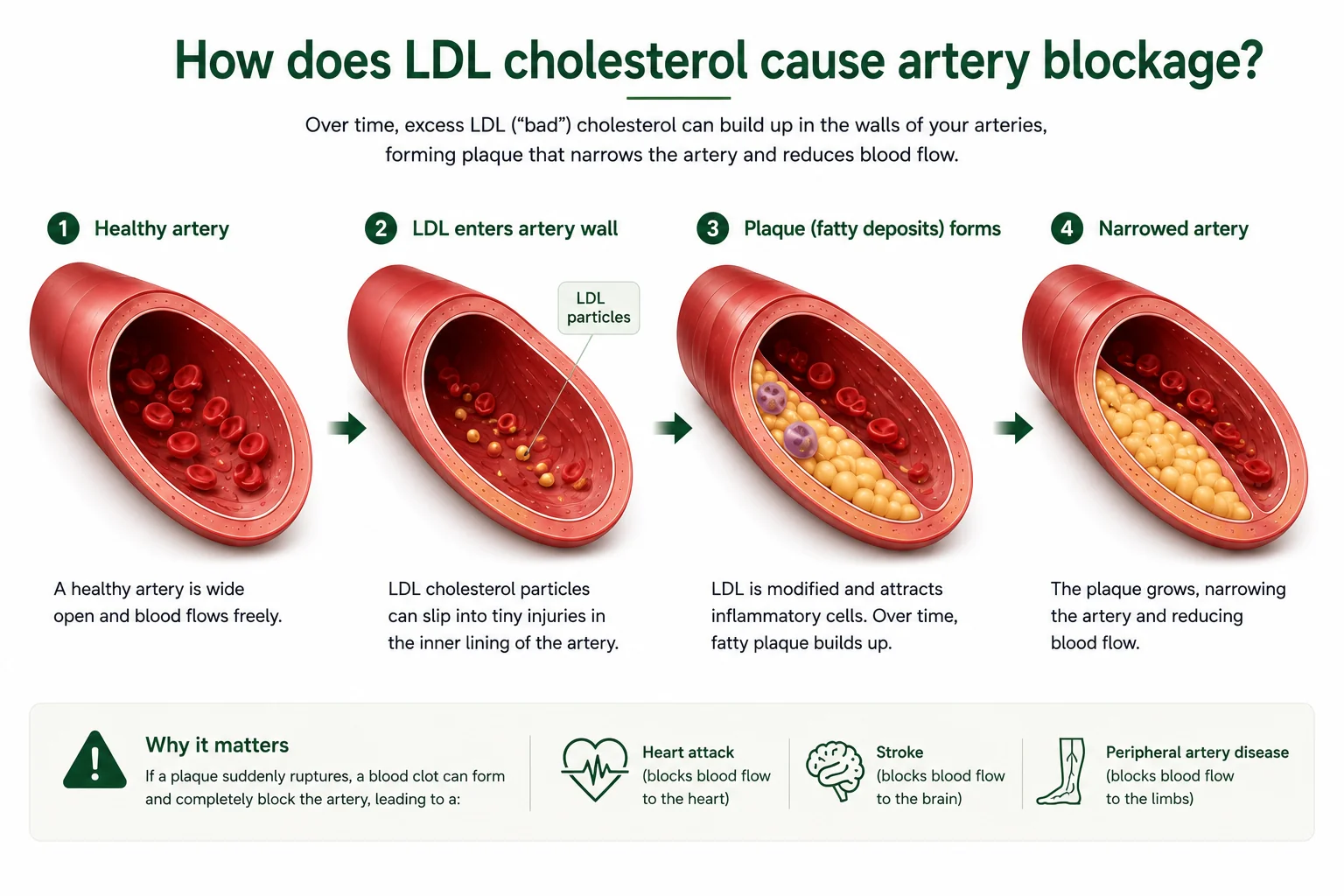
Problems arise when there is too much LDL (“bad”) cholesterol circulating in the bloodstream. Over many years, excess LDL cholesterol can build up inside the walls of your arteries, forming fatty plaques that narrow the blood vessels and reduce blood flow.
High cholesterol usually causes no symptoms, which is why many people only discover it during a health screening or routine blood test.
Why does high cholesterol matter?
High cholesterol usually causes no symptoms, but over many years it can narrow or block arteries supplying vital organs.
This reduces blood flow and increases the risk of serious medical conditions such as heart attack, stroke and peripheral artery disease.
High cholesterol can affect different parts of your body
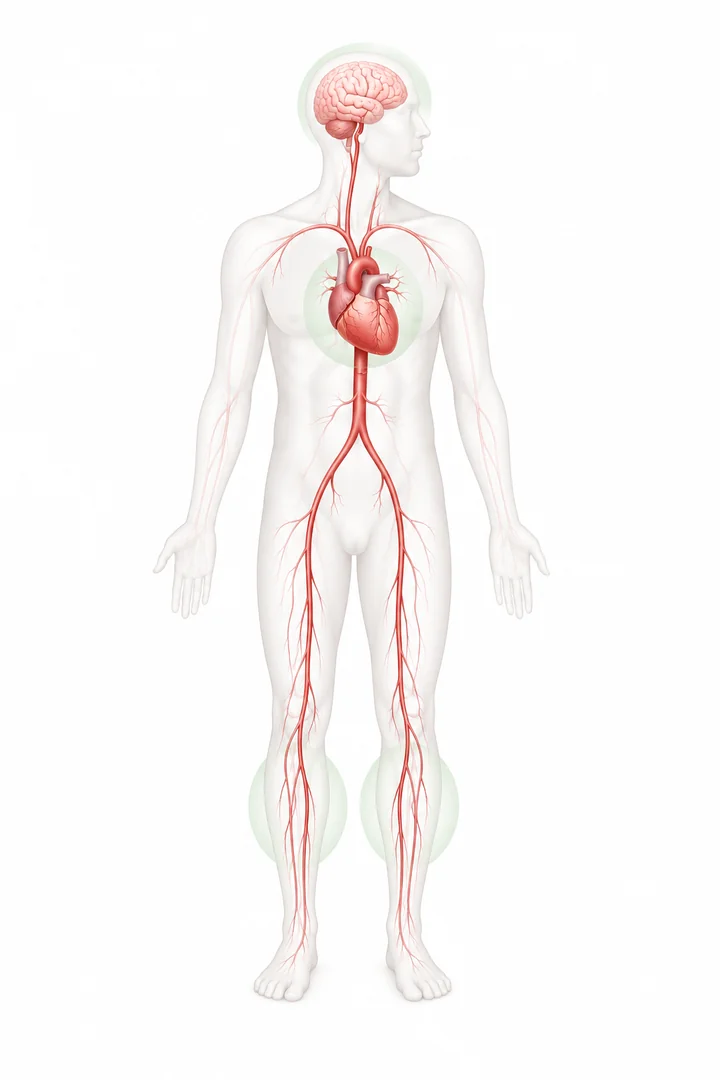
❤️ Heart Attack
Plaque will reduce blood flow to the heart.
If a plaque ruptures, it can suddenly block the artery and cause a heart attack.
🧠 Stroke
Blocked arteries can reduce blood flow to the brain.
This may lead to weakness, speech problems or permanent disability.
🦵 Peripheral Artery Disease
Reduced blood flow to the legs.
This may cause pain while walking and slow healing of wounds.
Do I need cholesterol medication?
Not everyone with high cholesterol needs medication, and not everyone with the same cholesterol level has the same risk of heart attack or stroke.
At GreenLink Medical Clinic, treatment decisions are based on your overall cardiovascular risk, rather than your cholesterol level alone.
How do doctors assess cardiovascular risk?
Doctors consider several factors that influence your risk of heart attack and stroke, including:
🧓 Age
🩸 Blood pressure
🧪 LDL cholesterol level
🩺 Diabetes
🚬 Smoking status
🫘 Kidney disease
💌 Previous heart attack or stroke
👨🏻👩👧👦 Family history (where appropriate)
These factors are combined to estimate your overall cardiovascular risk and help determine whether lifestyle changes alone are appropriate or whether cholesterol-lowering medication is recommended.
🩺 Singapore Cardiovascular Risk Assessment
We use the Singapore Ministry of Health cardiovascular risk calculator to estimate your risk of heart attack and stroke and to guide treatment decisions according to current Singapore clinical guidelines.
| Patient A | Patient B |
| 42 years old | 68 years old |
| Non-smoker | Smoker |
| No diabetes | Diabetes |
| Normal blood pressure | High blood pressure |
| LDL: 3.3 mmol/L | LDL: 3.3 mmol/L |
| Lower cardiovascular risk | Higher cardiovascular risk |
Although both patients have the same LDL cholesterol level, their overall cardiovascular risk is different.
This means their treatment recommendations may also differ.
How is high cholesterol treated?
High cholesterol is usually managed with a combination of healthy lifestyle changes and, when appropriate, cholesterol-lowering medication.
The right treatment depends on your overall cardiovascular risk, LDL cholesterol level and other medical conditions.
🥗 Lifestyle changes
Healthy lifestyle changes are recommended for everyone with high cholesterol, whether or not medication is required. Even small improvements can reduce your cardiovascular risk and enhance the benefits of cholesterol-lowering medication.
Weight loss can improve cholesterol levels, reduce blood pressure, improve blood sugar control and lower overall cardiovascular risk.
⚖️ Weight Loss
For patients who are overweight or obese, losing weight can improve cholesterol levels, lower blood pressure and reduce the risk of diabetes and heart disease.
For suitable patients, medical weight management with GLP-1 medications may also be considered
➡️ Learn more about our Weight Management services
🥦 Healthy Diet
Choose a diet rich in vegetables, fruits, whole grains, legumes and healthy fats.
Reducing saturated fats and highly processed foods can help lower LDL cholesterol.
🚶 Regular Exercise
Aim for at least 150 minutes of moderate-intensity exercise each week, together with regular muscle-strengthening activities.
🚭 Stop Smoking
Stopping smoking reduces cardiovascular risk and improves the health of your heart and blood vessels, even if your cholesterol level remains unchanged.
💊 Statins
Statins are the first-line treatment for most patients who require cholesterol-lowering medication.
They reduce LDL cholesterol and have been proven to lower the risk of heart attack and stroke.
💊 Ezetimibe
Ezetimibe reduces the absorption of cholesterol from the intestine and is often added when LDL cholesterol remains above target despite statin therapy, or when lower doses of statins are preferred.
💉 PCSK9 inhibitors (Evolocumab)
For patients at very high cardiovascular risk or those who are unable to reach their LDL cholesterol targets with standard treatment, nwer treatments with PCSK9 inhibitors such as Evolocumab (Repatha®) can provide substantial additional LDL cholesterol reduction.
Advanced Cholesterol Treatment with Repatha® (Evolocumab)
Evolocumab (Repatha®)
For some patients, lifestyle changes, statins and ezetimibe may not be enough to achieve their LDL cholesterol target. Others may develop muscle aches or side effects that limit the use of statins.
Evolocumab (Repatha®) is an advanced cholesterol-lowering medication that can significantly reduce LDL cholesterol and further lower the risk of heart attack and stroke in suitable patients.
Who may benefit?
❤️ Patients with established cardiovascular disease
Patients who have had a heart attack or stroke often require lower LDL cholesterol targets to reduce the risk of future cardiovascular events.
📉 LDL cholesterol remains above target despite treatment
Some patients continue to have LDL cholesterol levels above their target despite taking statins and ezetimibe. Repatha® may provide additional LDL cholesterol reduction in suitable patients.
💊 Unable to tolerate statins
Patients who develop significant muscle symptoms or other side effects may be suitable for alternative cholesterol-lowering treatments after assessment.
🧬 Familial Hypercholesterolaemia
People with inherited high cholesterol often require more intensive treatment to achieve recommended LDL cholesterol targets.
How is Repatha® given?
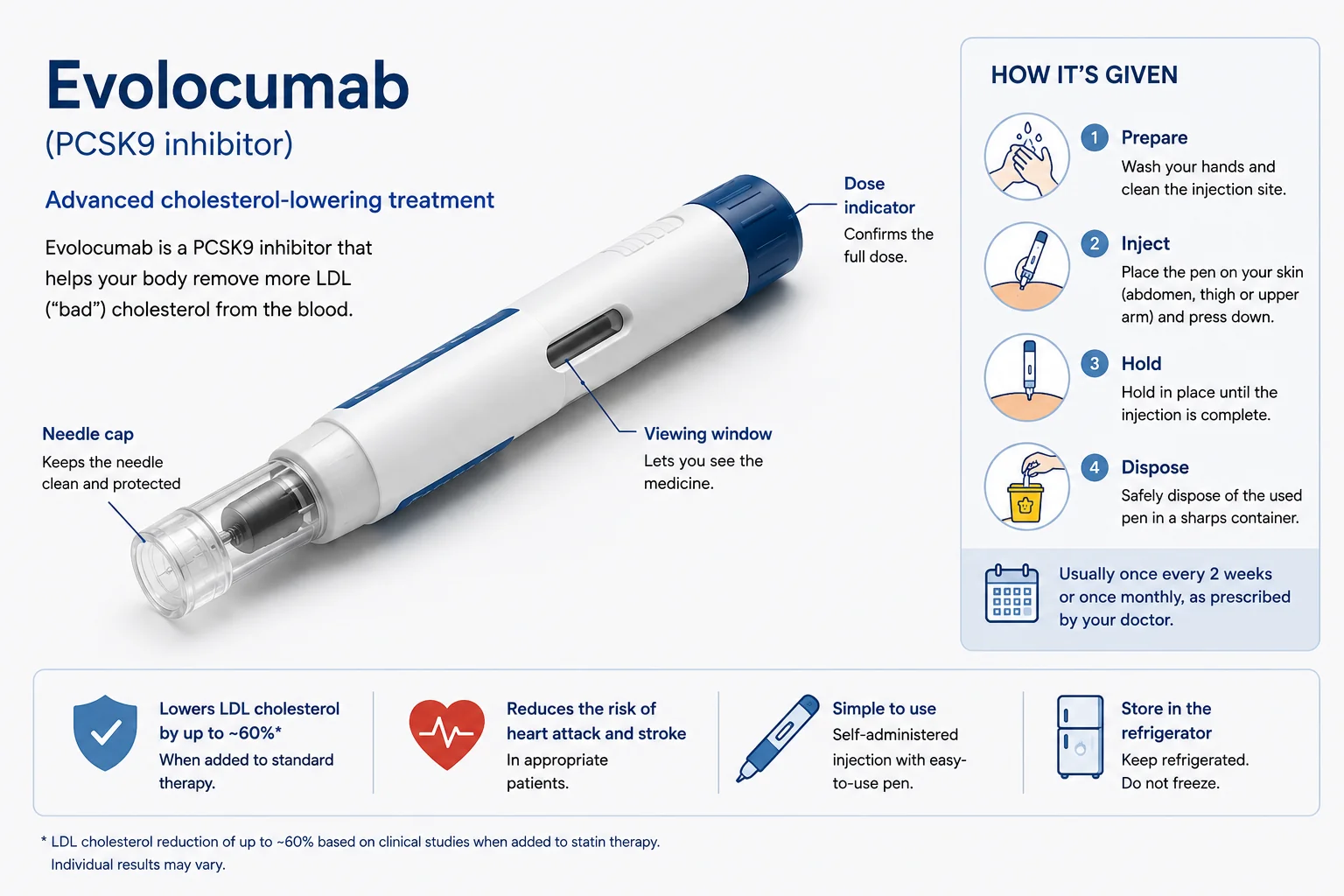
- Self-administered injection
- Usually once every 2 weeks or once monthly depending on the prescribed dose
- Simple to use after demonstration
- Can be stored in the refrigerator
How effective is it?
Clinical studies have shown that Evolocumab/Repatha® can reduce LDL cholesterol by around 60% when added to standard cholesterol-lowering therapy. It has also been shown to reduce the risk of future heart attack and stroke in appropriate patients.
Frequently Asked Questions
Is Repatha® a statin?
No. Repatha® is a PCSK9 inhibitor and works differently from statins.
How often do I need the injections?
Usually every two weeks or once monthly, depending on the prescribed dose.
Can a GP prescribe Repatha®?
Suitable patients can be assessed at GreenLink Medical Clinic. We’ll review your cholesterol results, cardiovascular risk and previous treatment before recommending whether Repatha® is appropriate.
🩺 Evolocumab (Repatha®) is available at GreenLink Medical Clinic
If your LDL cholesterol remains above target despite treatment, or if you have difficulty tolerating statins, we can assess whether Repatha® is appropriate for you based on your cardiovascular risk and treatment goals.
Unsure if Repatha is suitable for you?
Bring along your recent cholesterol results, or arrange a consultation at our clinic with Dr Hong to discuss your cardiovascular risk and treatment options.
We are located in just next to Khatib MRT station in Yishun.