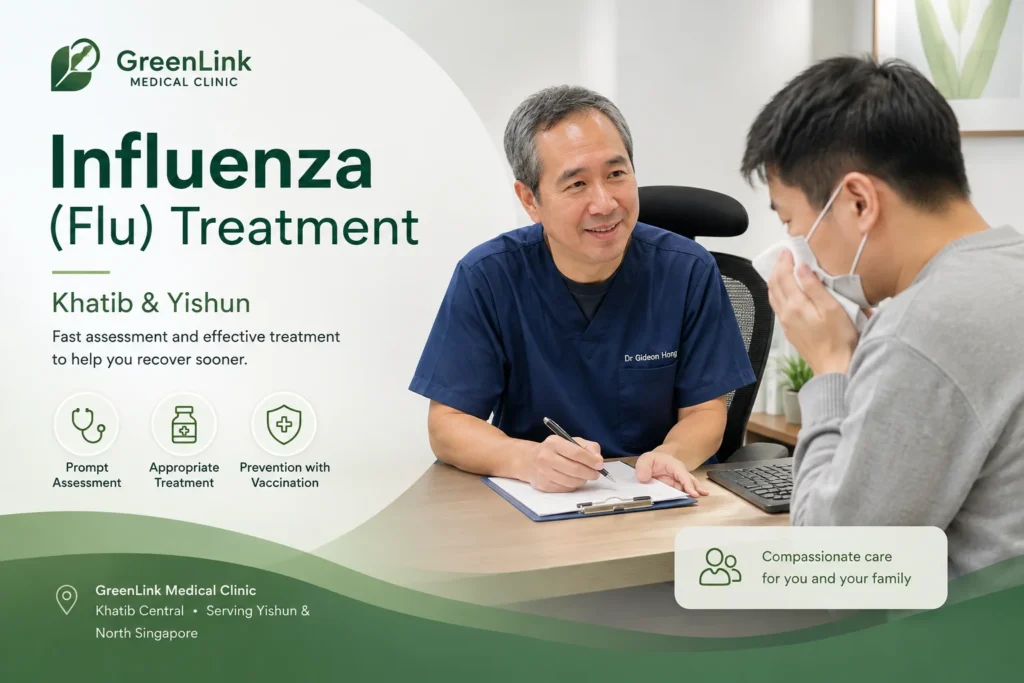
Influenza (Flu) Treatment in Khatib & Yishun | GreenLink Medical Clinic
Fast Assessment and Treatment for Influenza
Influenza is more than just a bad cold. It is a viral infection that can cause high fever, severe body aches, cough and extreme fatigue. While many people recover within a week, influenza can lead to serious complications, particularly in older adults, young children, pregnant women and people with chronic medical conditions.
At GreenLink Medical Clinic, we provide prompt assessment and treatment for patients with influenza in Khatib, Yishun and the surrounding North Singapore neighbourhoods. Our experienced family physician will assess your symptoms, determine whether antiviral medication such as Tamiflu® (Oseltamivir) is appropriate, and advise you on the best treatment to support your recovery. We also provide annual influenza vaccination to help reduce your risk of infection.
What is Influenza?
Influenza, commonly known as the flu, is a contagious viral infection affecting the nose, throat and lungs. It spreads easily through respiratory droplets when an infected person coughs, sneezes or talks.
Unlike the common cold, influenza often develops suddenly and causes more severe symptoms.
Common Symptoms of Influenza
- High fever & Chills
- Headache, Muscle aches & Joint pain
- Sore throat
- Dry cough
- Runny or blocked nose
- Extreme tiredness
- Loss of appetite
- Some people may also experience nausea, vomiting or diarrhoea, especially children.
Influenza vs Common Cold
Feature
Onset
Fever
Body aches
Fatigue
Cough
Sneezing
Recovery
Influenza
Sudden
Common, often high
Prominent, more severe
Marked
Common
Less Common
7-10 Days
Common Cold
Gradual
Low Grade
Mild
Mild
Mild
Common
5 – 7 Days
Who is More Likely to Develop Severe Influenza?
People at higher risk include:
- Adults aged 65 years and above
- Pregnant women
- Young children
- People with diabetes
- Heart disease
- Chronic lung disease (including asthma)
- Kidney disease
- Cancer patients
- People with weakened immune systems
How is Influenza Diagnosed?
Diagnosis is usually based on:
- Your symptoms
- Physical examination
- Nasal Swab Rapid Test (in clinic)
Treatment for Influenza
Most patients benefit from:
- Adequate rest
- Drinking plenty of fluids
- Fever and pain medication
- Monitoring symptoms
- Antiviral Medication if diagnosed within the first 24 – 48 hours
Antiviral Medication – Tamiflu® (Oseltamivir)
Tamiflu® (Oseltamivir) is an antiviral medication that can shorten the duration of influenza and reduce the risk of complications.
It works best when started within 48 hours of symptom onset.
Your doctor will assess whether Tamiflu is appropriate based on:
- Your symptoms
- Duration of illness
- Your age
- Underlying medical conditions
- Risk of complications
Not everyone with influenza requires antiviral medication.
Antibiotics Do Not Treat Influenza
Influenza is caused by a virus, so antibiotics are not effective.
Antibiotics are only prescribed if there is evidence of a bacterial infection, such as pneumonia, sinusitis or certain ear infections.
Preventing Influenza
The best ways to reduce your risk include:
- Annual influenza vaccination
- Regular hand washing
- Covering your mouth when coughing or sneezing
- Wearing a mask if unwell
- Staying home while sick
Influenza Vaccination
➡️ Looking to prevent influenza? Learn more about our Influenza Vaccination services.
Feeling Unwell with Influenza Symptoms?
If you have a high fever, cough, sore throat, body aches or suspect you may have influenza, early medical assessment can help ensure you receive the appropriate treatment and advice. Antiviral medication such as Tamiflu® may be beneficial when started early in selected patients.
Walk-in consultations are welcome at GreenLink Medical Clinic in Khatib, serving patients from Yishun and the surrounding North Singapore neighbourhoods.
👉 Visit us today for assessment and treatment.