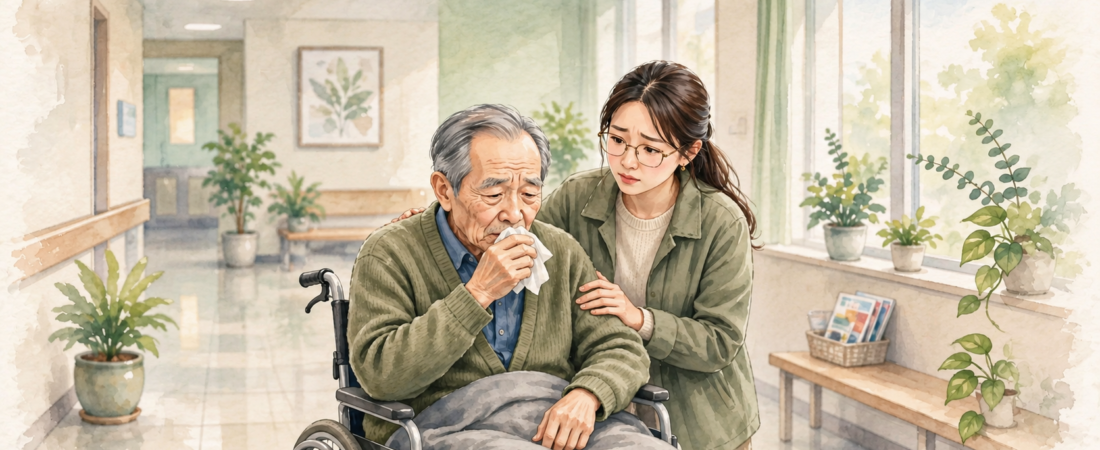
“…this is not the same father that I had brought to hospital before his admission…”
Some time ago, after finishing up a Saturday morning clinic session, I attended a medical lecture for doctors.
Most doctors attend lectures and training after office hours, and many Saturday afternoons, and sometimes Sundays, are spent going for updates and training.
The topic that day was the RSV Vaccine — Respiratory Syncytial Virus Vaccine.
RSV Is Nothing New
First off, RSV is nothing new.
Seated next to me was a much older doctor. He said he didn’t know much about it other than what we were taught during our university days — that it was mainly a disease affecting babies and young children.
He was there to find out more about what had been going on as well.
Yes, to parents, you might remember your child having been ill when they were very young. Some had wheezing and had to be admitted to hospital.
You might have heard about this condition called bronchiolitis, which is basically an inflammation of the small airways, commonly caused by RSV.
That day, the professor from KK Hospital told us that by 2 years of age, virtually all children would have been exposed to RSV.
Now, we have an ageing population in Singapore.
There are more and more older people compared to younger ones. It is estimated that by 2030, around 1 in 4 Singapore citizens will be aged 65 and above.
The elderly are more vulnerable, and when they come down with something like an RSV infection, their health can take a turn for the worse.
A Case That Stayed With Me
The first speaker that day began his part of the lecture by taking us through a real-life case of a patient he had treated in hospital.
This was an elderly gentleman who had a few chronic medical problems, such as diabetes, hypertension and heart disease.
He had developed symptoms of cough and fever and went to see his family doctor.
The doctor assessed him and started him on antibiotics for a suspected infection.
However, his symptoms continued to worsen until he developed shortness of breath and went to hospital.
There, tests were performed and he was found to have an RSV infection.
Unlike influenza, for which antiviral medications are available, there is currently no specific antiviral treatment routinely used for RSV infection in adults.
Treatment is largely supportive, including oxygen when needed, adequate hydration and close monitoring.
Antibiotics do not treat RSV itself, as RSV is a virus. However, they may be appropriate if a bacterial infection is also suspected or diagnosed.
A Cascade of Complications
The specialist talking to us told us this.
The patient developed a “cascade of complications” after admission.
From the RSV infection, he went on to develop a secondary infection in the lungs — pneumonia, which worsened his oxygen levels.
He had to be admitted to the ICU.
Then his heart was affected, and he had to be given medication for his heart condition.
However, he developed other complications from the medication used to treat his heart, and on it went…
Long story short, he had many complications during his admission for RSV infection.
He survived, but his body was severely deconditioned after the hospital admission, and he was a lot weaker than before.
Upon discharge, his daughter said these words to the specialist:
“…this is not the same father that I had brought to hospital before his admission…”
Surviving an Infection Is Not Always the End of the Story
The point of this story was to illustrate that, for the elderly, an RSV infection can cause significant complications.
Sometimes, surviving an infection is only part of the story.
A prolonged hospital stay, particularly one involving intensive care, can leave an older person much weaker than before.
They may lose muscle strength, mobility and some of their ability to carry out everyday activities independently.
Recovery can take a long time, and some patients may never fully return to their previous level of function.
This was what made the daughter’s words so meaningful.
Her father had survived the illness, but he was no longer the same person physically when he returned home.
RSV Vaccination — What Has Changed?
When I originally shared this story, RSV vaccines had only recently become available in Singapore.
Since then, the approved uses of RSV vaccines have expanded.
In Singapore, RSV vaccines are available for adults aged 60 years and above to help prevent lower respiratory tract disease caused by RSV.
Certain adults aged 18 to 59 who are at increased risk of severe RSV disease may also be eligible for vaccination.
People with chronic lung disease, heart disease or weakened immune systems are among those who may be at greater risk of complications.
For older adults, the decision to vaccinate should take into account their age, medical conditions and individual risk of severe RSV infection.
RSV vaccination is currently administered as a single dose and is not treated as a routine annual vaccination like influenza vaccination.
There is also an RSV vaccine, Abrysvo, approved for use during pregnancy between 32 and 36 weeks of gestation to help protect infants against RSV-related lower respiratory tract disease during their first six months of life.
Although RSV vaccines are approved for use in Singapore, they are not currently included in the National Adult Immunisation Schedule (NAIS), so the usual NAIS vaccination subsidies do not apply.
Why I Wanted to Share This
Most people recover from common respiratory infections without serious problems.
But for older adults, particularly those with underlying medical conditions, an infection such as RSV may have consequences that go well beyond a cough and fever.
The elderly gentleman in this story survived his illness.
But his daughter’s words remind us that recovery is not always simply a matter of being discharged from hospital.
That is why prevention, including appropriate vaccination, deserves consideration.
You can drop by for a discussion on the different vaccines that might be relevant to you, based on your age group and medical conditions.
Dr Hong
A Note About RSV Vaccination
The suitability of RSV vaccination depends on factors including age, medical conditions, pregnancy and individual risk.
For more information about RSV vaccination, including who may benefit and what to consider before vaccination, visit our RSV Vaccination page at GreenLink Medical Clinic.
Editor’s note: This article was originally shared by Dr Hong on Facebook on 15 January 2025. It has been edited and updated for publication on The GreenLink, including revisions to the RSV vaccination information. The hospital case described was presented by a specialist during a medical lecture attended by Dr Hong and was not a patient treated at GreenLink Medical Clinic.
Medical disclaimer: This article is intended for general health education and does not replace personalised medical advice. Vaccination suitability and recommendations may change as new evidence and regulatory guidance become available.