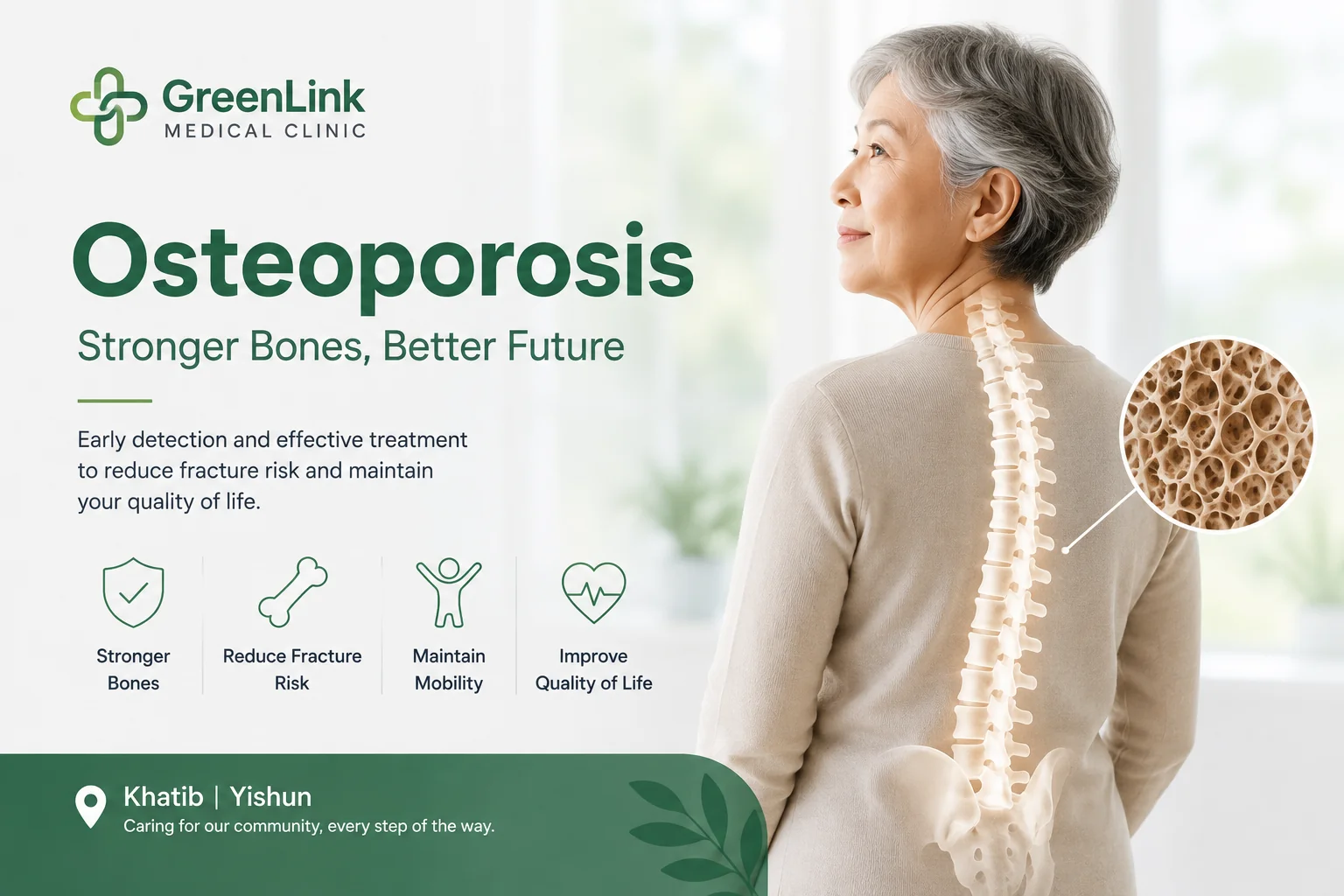
Osteoporosis Treatment in Khatib & Yishun
Osteoporosis is a common condition that gradually weakens your bones, making them more likely to break after a minor fall or even everyday activities. Because bone loss usually occurs without symptoms, many people only discover they have osteoporosis after suffering a fracture.
At GreenLink Medical Clinic, we provide personalised osteoporosis assessment and treatment for patients in Khatib, Yishun and the surrounding areas. From assessing your fracture risk and arranging bone density (DEXA) scans to prescribing medications such as Denosumab (Prolia®) for suitable patients, our aim is to help strengthen your bones and reduce the risk of future fractures.
💡 Key Point
Osteoporosis is often called a “silent disease” because it usually causes no symptoms until a fracture occurs. Early diagnosis and treatment can significantly reduce the risk of broken bones and help you maintain your independence and quality of life.
Bone density (DEXA) scans can detect osteoporosis before a fracture occurs, allowing treatment to begin early.
What is Osteoporosis?
Osteoporosis is a condition in which bones become weaker and more fragile over time. Healthy bone is constantly being broken down and rebuilt. As we age, particularly after menopause in women, bone loss may occur faster than new bone formation.
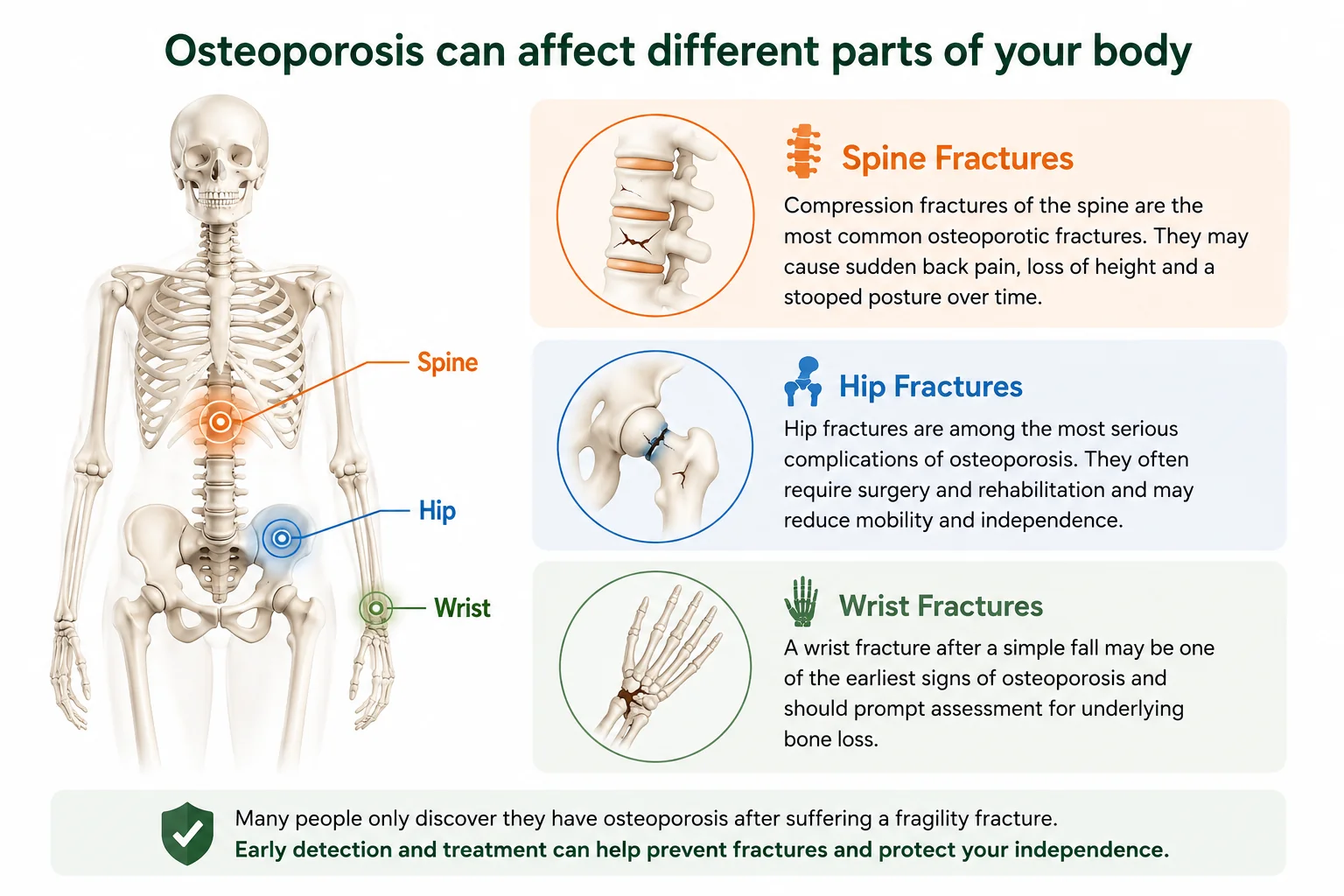
As bone density decreases, bones become thinner and more porous, making them more likely to break after a minor fall or even everyday activities. The spine, hip and wrist are the most commonly affected areas.
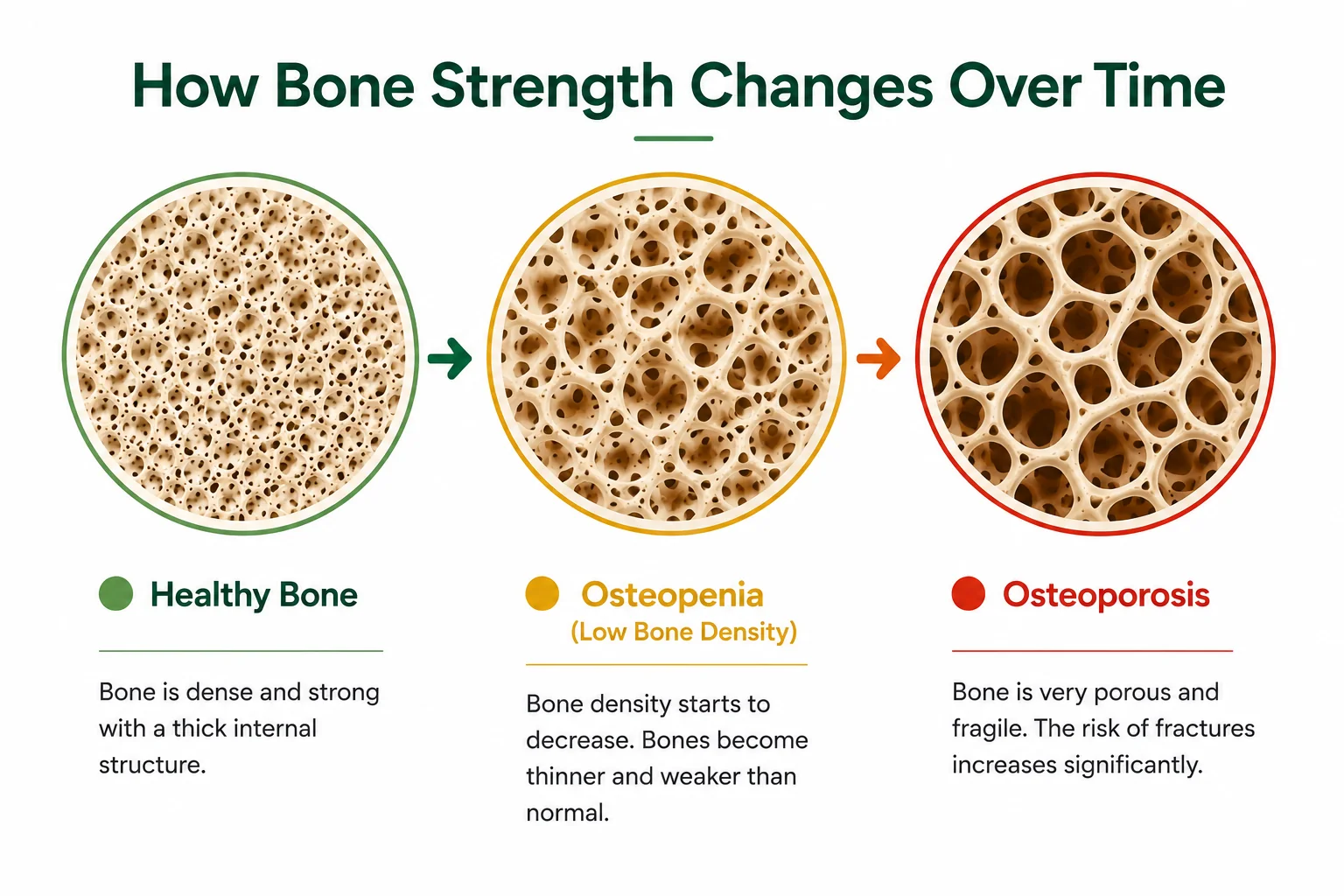
Healthy bone has a strong internal structure that provides support and resists fractures. As bone density decreases, the spaces within the bone become larger and the supporting framework becomes thinner.
This gradual weakening progresses from osteopenia (low bone density) to osteoporosis, increasing the risk of fractures.
Why does Osteoporosis Matter?
Although osteoporosis itself usually does not cause pain, it greatly increases the risk of fragility fractures—broken bones that occur after a minor fall or injury. These fractures most commonly affect the spine, hip and wrist, and can have a significant impact on mobility, independence and quality of life.
Who is at Risk of Osteoporosis?
Osteoporosis can affect both women and men, but certain factors increase the likelihood of developing weak bones and fractures.
If you have one or more of the following risk factors, your doctor may recommend a bone density (DEXA) scan to assess your bone health.
Current Singapore guidance recommends identifying people with osteoporosis or fragility fracture risk early so that treatment can begin before fractures occur.
👩 Women above 65 years
Routine osteoporosis screening is recommended because bone density naturally decreases with age, particularly after menopause.
🌸 Postmenopausal Women
Women who have gone through menopause, especially those with additional risk factors, have an increased risk of osteoporosis.
💊 Long-term Steroid Use
Taking oral corticosteroids such as prednisolone for several months can weaken bones and increase fracture risk.
🦴 Previous Fragility Fracture
Breaking a bone after a simple fall from standing height may be an early sign of osteoporosis and should prompt further assessment.
⚖️ Low Body Weight or Family History
People who are underweight or have a close family member with osteoporosis or hip fractures may have a higher risk of developing osteoporosis.
👨 Older Men with Risk Factors
Although less common than in women, osteoporosis can also affect men, particularly with advancing age, low testosterone or certain medical conditions.
🩻 Bone Density (DEXA) Scan
A DEXA scan is a simple, painless and low-radiation test that measures bone density and helps diagnose osteoporosis before fractures occur.
We will refer you to a radiology/X-ray centre for your scan, and discuss the results with you at your follow-up visit.
Early diagnosis allows treatment to begin before serious complications develop.
We can discuss getting a Bone Density Scan done during Health Screening.
How is Osteoporosis Diagnosed?
Because osteoporosis usually causes no symptoms, many people are only diagnosed after suffering a fragility fracture. However, identifying people at increased risk with bone density (DEXA) scans and clinical assessment allows osteoporosis to be detected earlier, before fractures occur.
👨⚕️ Medical Assessment
Your doctor will discuss:
- Age
- Previous fractures
- Medications
- Family history
- Medical conditions
- Lifestyle factors
🩻 DEXA Scan
A DEXA scan is the gold standard for measuring bone density. It is:
- Quick
- Painless
- Very low radiation
- Usually completed within 15–20 minutes
🧪 Blood Tests
Blood tests may be recommended to look for conditions that contribute to bone loss, such as:
- Vitamin D deficiency
- Calcium abnormalities
- Thyroid disorders
- Kidney disease
🩺 Treatment Plan
Your doctor will combine your medical history, bone density results and overall fracture risk to recommend the most appropriate treatment.
This may include:
- Lifestyle measures
- Calcium & Vitamin D
- Medications
- Regular monitoring
💡 Did You Know?
A Bone Density (DEXA) scan can help diagnose osteoporosis before a fracture occurs, allowing treatment to begin early and reducing the risk of future fractures.
Bone health assessment can be discussed during your Health Screening consultation if you have risk factors for osteoporosis.
How is Osteoporosis Treated?
The goal of osteoporosis treatment is to strengthen bones, reduce the risk of fractures and help you maintain an active and independent lifestyle.
Treatment is personalised based on your bone density, fracture risk, age and overall health.
Most patients benefit from a combination of lifestyle measures and, when appropriate, medications.
🥛 Calcium
Calcium is an essential building block for healthy bones. Most people should aim to obtain enough calcium through their diet, while supplements may be recommended if dietary intake is insufficient.
☀️ Vitamin D
Vitamin D helps your body absorb calcium and maintain healthy bones. Supplements may be recommended if you have low vitamin D levels or are at increased risk of deficiency.
🏋️ Weight-Bearing & Strength Exercise
Regular weight-bearing and resistance exercises help maintain bone strength, improve balance and reduce the risk of falls.
🚭 Healthy Lifestyle
Stopping smoking, limiting alcohol intake and maintaining a healthy body weight all contribute to better bone health.
🏡 Fall Prevention
Simple measures such as improving home safety, correcting vision problems and reviewing medications can reduce the risk of falls and fractures.
💊 Osteoporosis Medications
Prescription medications can significantly reduce fracture risk. Your doctor will recommend the most appropriate medication based on your fracture risk and overall health.
Several effective medications are available to treat osteoporosis.
The most appropriate treatment depends on your fracture risk, medical history and personal preferences.
Your doctor will discuss the options with you and recommend the treatment that best suits your needs.
Advanced Osteoporosis Treatment with Denosumab (Prolia®)
Denosumab (Prolia®) is an effective prescription medication used to treat osteoporosis in people at increased risk of fractures. It works by slowing bone breakdown, helping to improve bone strength and reduce the risk of fractures in the spine, hip and other bones.
At GreenLink Medical Clinic, we provide Denosumab injections for suitable patients as part of a personalised osteoporosis management plan.
Who may benefit?
💉 High fracture risk
Patients with osteoporosis who have a high risk of fractures may benefit from Denosumab to help strengthen bones and reduce future fracture risk.
🦴 Unable to tolerate oral bisphosphonates
Some people develop side effects or have medical reasons why oral osteoporosis medications are not suitable. Denosumab may be an appropriate alternative.
🦴 Previous Fragility Fracture
Patients who have already suffered an osteoporotic fracture are at higher risk of future fractures and may benefit from prescription osteoporosis treatment after assessment.
🚺 Postmenopausal Osteoporosis
Denosumab is commonly used in postmenopausal women with osteoporosis who require prescription treatment to reduce fracture risk.
Safety and Important Considerations
Like all prescription medications, Denosumab (Prolia®) has potential side effects. Fortunately, serious complications are uncommon, and most patients tolerate treatment well. Before starting treatment, your doctor will discuss the benefits and risks to help you make an informed decision.
🦷 Dental Health and Osteonecrosis of the Jaw
A rare complication of Denosumab is osteonecrosis of the jaw (ONJ). The risk is low in patients treated for osteoporosis, but it is higher after invasive dental procedures such as tooth extractions or dental implants.
- Tell your dentist if you are receiving Denosumab.
- Tell your doctor if major dental treatment is planned.
- At GreenLink Medical Clinic, we usually recommend dental clearance before starting Denosumab treatment, particularly if significant dental work is anticipated.
- Whenever possible, complete major dental work before your first injection.
- Maintain good oral hygiene and regular dental check-ups.
⚠️ Other Possible Side Effects
Most patients tolerate Denosumab well.
Possible side effects include:
- Mild pain, redness or swelling at the injection site
- Muscle or joint aches
- Low calcium levels
- Skin infections (uncommon)
Your doctor may recommend calcium and vitamin D supplementation where appropriate.
How is Denosumab (Prolia®) administered?
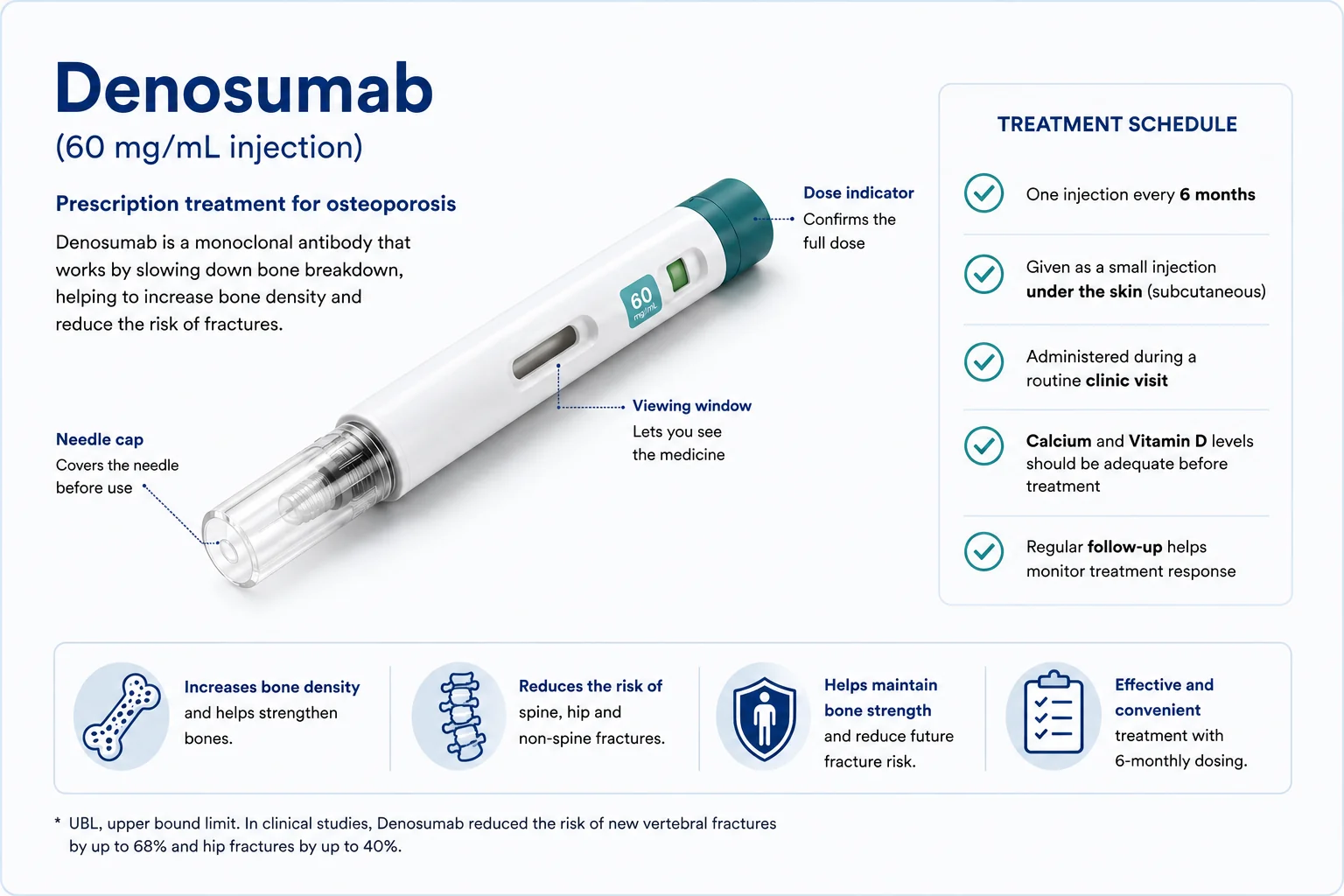
Treatment Schedule
✅ One injection every 6 months
✅ Given as a small injection under the skin
✅ Usually administered during a clinic visit
✅ Treatment is generally well tolerated
✅ Calcium and Vitamin D intake should be adequate during treatment
💡 Important
Denosumab (Prolia®) should be given every six months. Delaying or stopping treatment without medical advice can result in rapid bone loss and an increased risk of multiple vertebral (spinal) fractures. If treatment needs to be stopped, your doctor will discuss an alternative medication to help protect your bones.
🏥 Denosumab (Prolia®) at GreenLink Medical Clinic
GreenLink Medical Clinic provides Denosumab (Prolia®) injections for suitable patients in Khatib, Yishun and the surrounding North Singapore communities.
Treatment is personalised based on your bone density, fracture risk, medical history and overall health. We also provide ongoing monitoring and follow-up to help reduce your risk of future fractures.
Frequently Asked Questions
What are the early symptoms of osteoporosis?
Osteoporosis is often called the “silent disease” because it usually causes no symptoms in its early stages. Many people only discover they have osteoporosis after suffering a fragility fracture following a minor fall or injury. In some cases, osteoporosis may lead to gradual loss of height, a stooped posture or back pain due to compression fractures of the spine. If you have risk factors such as increasing age, menopause, long-term steroid use or a family history of osteoporosis, speak to your doctor about whether you should be assessed.
Who should have a Bone Density (DEXA) scan?
A Bone Density (DEXA) scan may be recommended if you have an increased risk of osteoporosis. This includes postmenopausal women, older adults, people who have suffered a fragility fracture, those taking long-term steroid medications, or individuals with medical conditions that affect bone health. Your doctor will assess your overall fracture risk and advise whether a DEXA scan is appropriate for you.
Can osteoporosis be treated?
Yes. Although osteoporosis cannot usually be completely reversed, effective treatment can strengthen bones, reduce bone loss and significantly lower the risk of future fractures. Treatment may include lifestyle measures, adequate calcium and vitamin D intake, regular weight-bearing exercise and prescription medications such as bisphosphonates or Denosumab (Prolia®), depending on your individual fracture risk.
Is osteoporosis painful?
Osteoporosis itself usually does not cause pain. Pain typically occurs only after a fracture develops, particularly fractures of the spine, hip or wrist. This is why early diagnosis is important—treatment before fractures occur can help reduce the risk of painful complications and preserve independence.
Is Denosumab (Prolia®) better than oral osteoporosis medications?
There is no single medication that is best for everyone. Oral bisphosphonates are commonly used as first-line treatment for osteoporosis. Denosumab (Prolia®) may be recommended for people at higher fracture risk, those who cannot tolerate oral medications, or those for whom oral treatment is unsuitable. Your doctor will recommend the most appropriate medication based on your bone density, fracture risk, medical history and individual needs.
What happens if I miss a Denosumab (Prolia®) injection?
Denosumab (Prolia®) should be given every six months. Delaying or stopping treatment without medical advice can lead to rapid bone loss and increase the risk of vertebral (spinal) fractures. If you miss an appointment, contact your doctor as soon as possible so that your treatment schedule can be reviewed and adjusted if necessary.
Can osteoporosis be prevented?
While osteoporosis cannot always be prevented, there are many ways to reduce your risk. Eating enough calcium, maintaining adequate vitamin D levels, performing regular weight-bearing and resistance exercises, avoiding smoking, limiting alcohol intake and preventing falls all help support long-term bone health. Early assessment is also important for people with significant risk factors.
Where can I receive osteoporosis treatment in Khatib or Yishun?
If you are concerned about osteoporosis or have suffered a fragility fracture, GreenLink Medical Clinic provides osteoporosis assessment and treatment for patients in Khatib, Yishun and the surrounding North Singapore communities. We can assess your fracture risk, discuss whether a Bone Density (DEXA) scan is appropriate, and recommend personalised treatment, including Denosumab (Prolia®), for suitable patients.
Concerned about osteoporosis?
If you have suffered a fragility fracture, have risk factors for osteoporosis, or would like advice on protecting your bone health, our doctors at GreenLink Medical Clinic in Khatib provide osteoporosis assessment and treatment for patients from Khatib, Yishun and the surrounding North Singapore communities.
We can assess your fracture risk, discuss whether a Bone Density (DEXA) scan is appropriate, and recommend personalised treatment to help reduce your risk of future fractures.